What’s Your Dream?
A nudge to turn a thought into something useful — and the spark behind this planner.
Explore the book ↗Pre-order · The first edition 2027
First 100 planners: founding price
Pre-orders are expected to start dispatching from the beginning of December 2026. Orders will not be sent before this date. Delivery time starts after dispatch.
You’ll pay on our secure checkout and get a confirmation email with your order details.
Have a question? Email us before checkout. UK delivery only.
Choose a heading to see what it means and an example.



Use the calendar for clinics, CPD, important dates and time that is just for you.
Your focus can be something you want to learn, a habit you want to build or something outside work. “From vision to action” helps make it manageable.
Plan your work, tasks and something to look forward to. Leave a little breathing room for the unexpected.
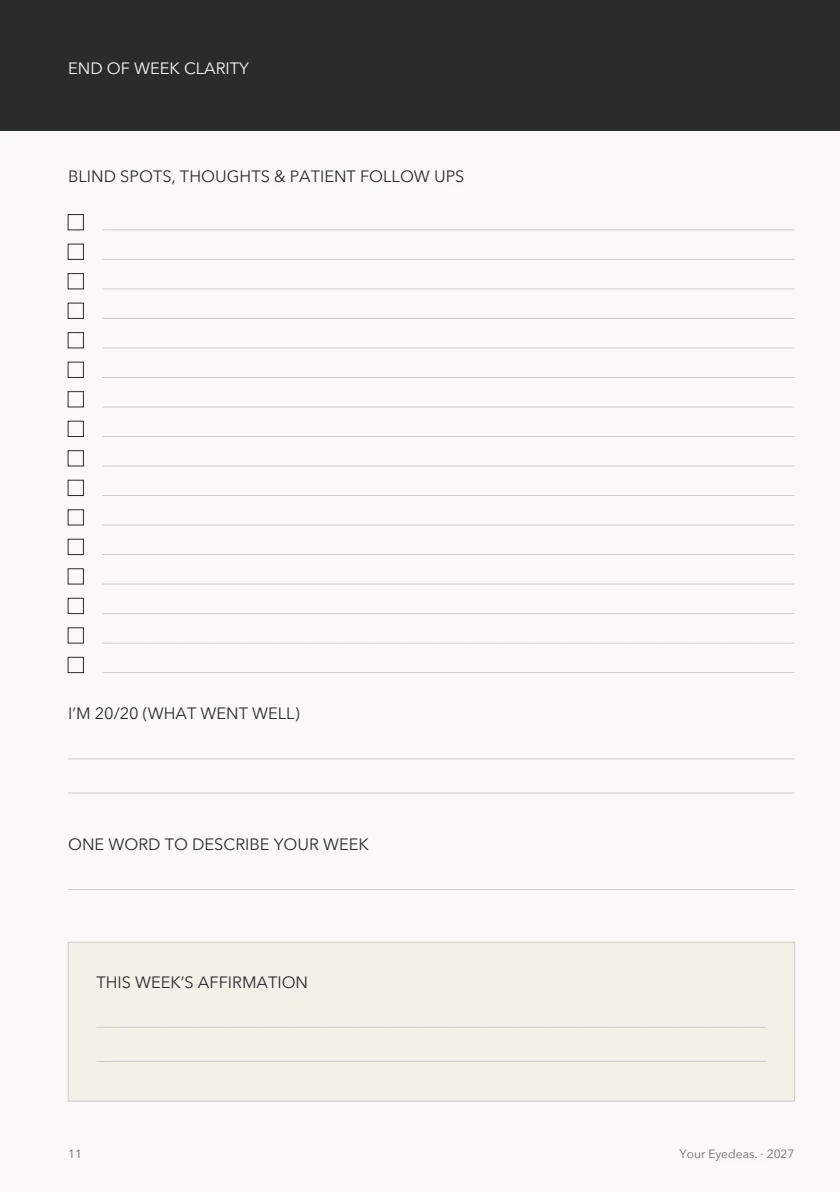
Use the tick boxes for general reminders and learning questions. Keep patient names, identifying details and clinical records in your secure practice system.
A useful conversation or a moment of asking for help can matter just as much as a big achievement.
Choose the word that fits how your week felt. Mixed feelings belong here too.
An affirmation is a short, supportive sentence to return to. Keep it believable: you don’t have to pretend a difficult day was easy.
Choose a situation to reveal an example, then make it sound like you.
What does your week need?
Choose a moment. Find a few words.
Borrow these words, change them or write something that sounds like you.
Personal reading recommendations for a little inspiration, perspective and reflection.
A nudge to turn a thought into something useful — and the spark behind this planner.
Explore the book ↗A fellow optometrist’s perspective on embracing imperfection, and a reminder to be kinder to ourselves.
Explore the book ↗Personal stories and practical thoughts on confidence, ambition and deciding what matters to you.
Explore the book ↗A look at self-love, everyday habits and making time to care for yourself as well as others.
Explore the book ↗